
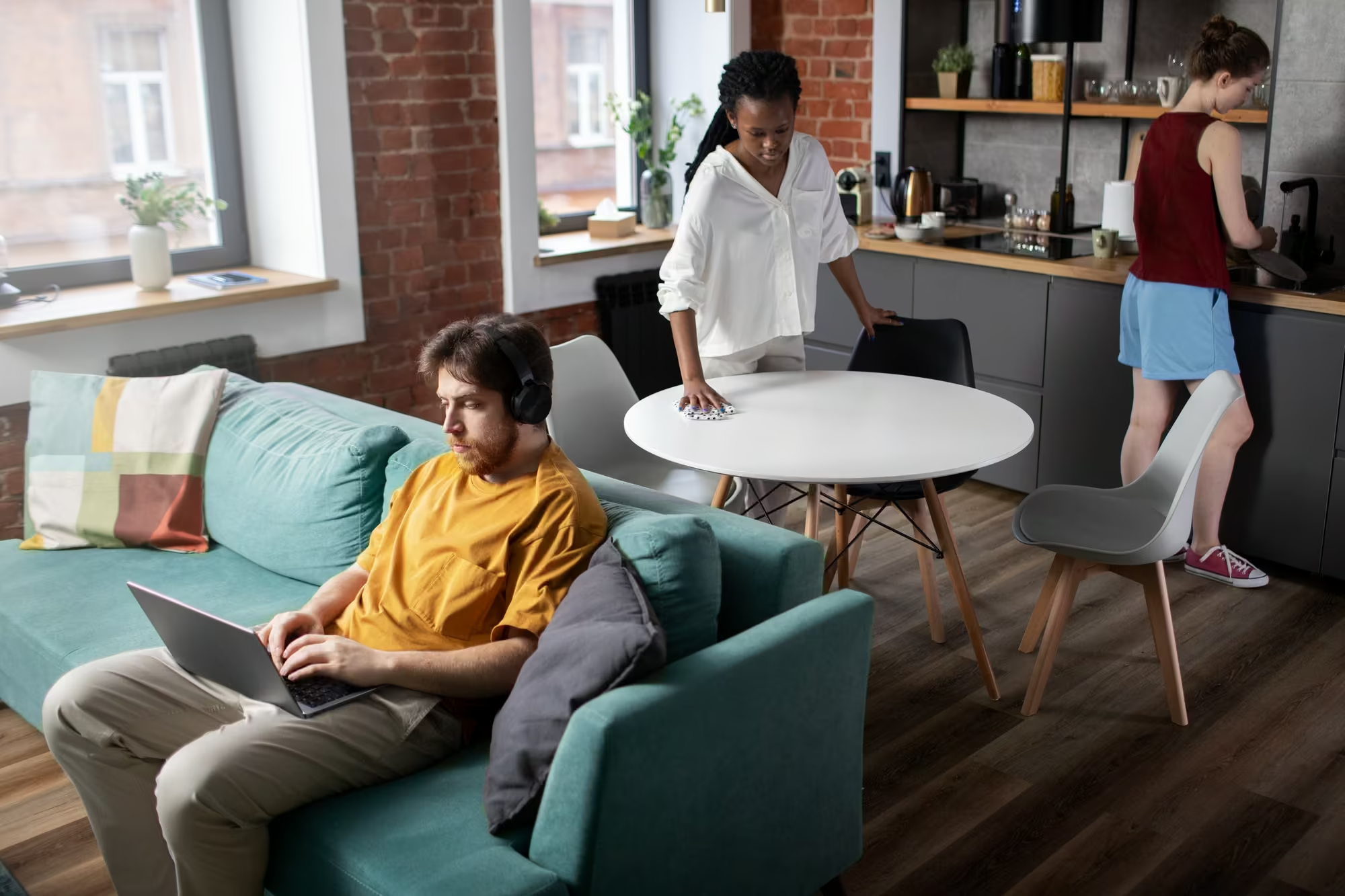
Living room layouts are shaped by one key decision: the type of seating used. Whether choosing a modular configuration or a fixed sofa suite, the layout will influence how the space functions, feels, and adapts over time.
For many households, this decision is not purely aesthetic. It often reflects practical considerations such as room size, flexibility, and budget. This is especially relevant for those who have household budgeting restraints and want to upgrade their furniture and appliances, as well as individuals who have a regular income and can manage small rental payments across a fixed term. It also plays a role for people furnishing long term rentals, where adaptability is often just as important as comfort.
Understanding the trade-offs between modular and fixed seating helps create a living space that remains functional and balanced over time.
What is Modular Seating?
Modular seating consists of individual sections that can be arranged in multiple configurations. These pieces can be repositioned, expanded, or reduced depending on the layout of the room.
Options such as the Jarva 6 Seater Modular or the Convertible 5 Seater Corner Modular Sofa highlight how modular designs allow for flexible seating arrangements that can adapt to different room sizes.
This flexibility is one of the key advantages of modular furniture, particularly in homes where layouts may change over time.
What is Fixed Seating?
Fixed seating refers to sofas or suites with a set structure that cannot be reconfigured. These are designed with a defined shape, such as a standard three-seater, a chaise lounge, or a corner suite.
For example, a configuration like the Coolabah Corner with Electric End Recliners provides a stable layout that is designed to remain in place.
Fixed seating is often chosen for its simplicity and structured appearance, particularly in living rooms where the layout is unlikely to change.
Layout Flexibility vs. Stability
The primary difference between modular and fixed seating lies in flexibility.
Modular seating allows households to:
- Rearrange layouts to suit different occasions.
- Expand or reduce seating over time.
- Adjust configurations when moving homes.
Fixed seating, on the other hand, provides:
- A consistent and stable layout.
- Defined seating positions.
- Simpler furniture planning.
For households furnishing long term rentals, modular seating can offer adaptability if room layouts or living arrangements change. Fixed seating may suit those who prefer a consistent setup with minimal adjustments.
Space Efficiency and Room Proportions
Room size plays a significant role in choosing between modular and fixed seating.
In smaller living rooms, fixed sofas often provide a more predictable footprint, making it easier to plan around walkways and other furniture.
In larger or open-plan spaces, modular seating can help define zones and maximise seating capacity without requiring multiple separate pieces.
Exploring different layouts within lounge and seating options can help households visualise how each style fits into their available space.
Budget and Practical Considerations
Furniture decisions are often made alongside other household expenses. Many people:
- Have household budgeting restraints and want to upgrade their furniture and appliances
- Prefer spreading costs rather than making large upfront purchases
In these cases, choosing the right seating configuration from the beginning helps avoid unnecessary replacements or adjustments later.
For households with regular income, structured payment arrangements can make it easier to select seating that properly fits the room rather than compromising due to upfront cost limitations.
Everyday Use and Lifestyle Needs
The choice between modular and fixed seating also depends on how the living room is used.
Modular seating works well for:
- Households that frequently entertain
- Families needing flexible seating arrangements
- Homes where layouts may change
Fixed seating is often suitable for:
- Smaller households
- Rooms with a consistent layout
- Spaces focused on everyday relaxation rather than reconfiguration
In many cases, achieving a balanced look also depends on how different furniture pieces work together within the same space, particularly when combining multiple items across a living room layout.
Planning for Long-Term Living
For households in long term rentals, flexibility and practicality often take priority over permanence. Furniture that can adapt to future moves or layout changes helps maintain usability over time.
Modular seating can be particularly useful in these situations, as it allows for adjustments without replacing entire furniture sets. Fixed seating may still work well where room dimensions are unlikely to change.
Reviewing available furniture options through Lightning Rentals allows households to compare configurations that align with both space requirements and financial planning.
Final Thoughts
Modular and fixed seating each offer distinct advantages depending on space, lifestyle, and long-term plans. Modular designs provide flexibility and adaptability, while fixed seating offers stability and simplicity.
Choosing between the two depends on how a living room is used, how often layouts may change, and how important flexibility is to the household. By considering both layout and budget factors, households can select seating that supports comfort, practicality, and long-term usability.
FAQs

Reviewed by
Dean Hawes has more than nine years’ experience in Australia’s consumer leasing industry and reviews our content to help ensure it is accurate, practical and up to date. Drawing on his expertise in consumer leasing, affordability assessments, and household appliance and furniture rental, he helps Australians make informed leasing decisions.