
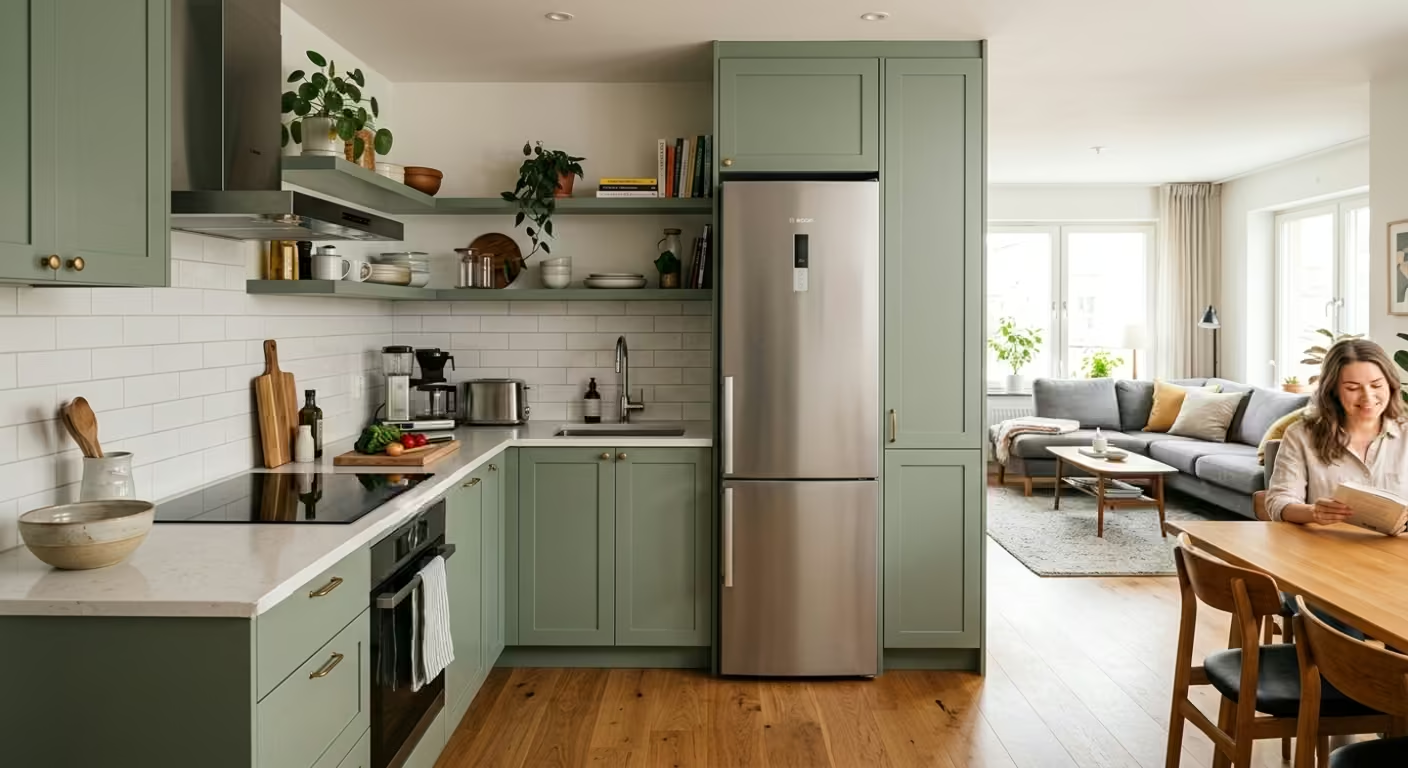
Fridge placement plays a central role in how a kitchen functions, yet it is often overlooked during setup. In smaller kitchens, poor positioning can restrict movement and limit access to key areas. In open-plan layouts, it can affect both workflow and how the kitchen integrates with surrounding living spaces.
Whether furnishing a compact apartment or organising a larger shared environment, placing a refrigerator correctly helps improve accessibility, maintain efficient movement, and support everyday routines. Reviewing different layouts within a broader refrigerator range can also help visualise how size and configuration influence placement options.
Where Should A Fridge Be Placed In A Small Kitchen?
In smaller kitchens, space efficiency is the primary concern. Every appliance must fit without disrupting movement or limiting access to surrounding cabinetry.
A well-positioned fridge in a compact layout should:
- Sit close to the main preparation area for convenience
- Avoid blocking walkways or tight corners
- Allow enough clearance for the door to open fully
Top-mount fridges are often well suited to these environments due to their vertical design and balanced proportions. A unit such as the Hisense 424L Top Mount Fridge offers practical storage without requiring excessive width, making it easier to integrate into narrower kitchens.
Placing the fridge toward the outer edge of the layout—rather than centrally—helps maintain a clear path, particularly in galley-style kitchens where movement is already limited.
Fridge Placement Strategies for Open-Plan Layouts
Open-plan kitchens require a different approach, as the fridge becomes part of a larger shared space that includes dining and living areas.
In these layouts, placement should:
- Align with cabinetry or wall lines to maintain visual consistency
- Allow easy access without interrupting social or seating zones
- Avoid creating unnecessary traffic flow through shared spaces
Bottom-mount fridges are commonly used in open-plan kitchens because they place frequently accessed items at eye level while maintaining a streamlined appearance. A model like the Hisense PureFlat Bottom Mount 503L demonstrates how modern design and functional storage can work together without overwhelming the layout.
Positioning the fridge slightly away from high-traffic zones, such as between the kitchen and lounge area, helps maintain a smoother transition between spaces.
How Much Clearance And Ventilation Does A Fridge Need?
Proper clearance is essential for both usability and long-term performance, regardless of kitchen size.
Most refrigerators require:
- Space at the sides and back for airflow
- Clearance above for heat dissipation
- Enough room in front to open doors comfortably
Without adequate ventilation, cooling efficiency may decrease, which can affect both performance and energy use over time.
In small kitchens, achieving this balance requires careful measurement, as limited space can make it tempting to position the fridge too tightly against walls or cabinetry. In open-plan layouts, there is typically more flexibility, but airflow should still not be restricted.
Matching Fridge Size to Kitchen Layout
Fridge size has a direct impact on placement flexibility and overall kitchen flow.
- Compact fridges are easier to position in smaller kitchens and allow more room for movement
- Mid-sized fridges offer a balance between storage and adaptability
- Larger fridges provide greater capacity but require more planning in terms of placement and clearance
Choosing the right size should not be based on capacity alone. It should also reflect how the appliance will fit within the available space and how often it will be accessed.
For a more informed decision, reviewing guidance on fridge capacity based on household size can help align storage needs with both kitchen layout and daily usage patterns.
How Can Fridge Placement Support A Cohesive Kitchen Design?
In open-plan homes, the kitchen is often visible from multiple areas, making visual consistency an important factor in appliance placement.
To support a cohesive design:
- Align the fridge with cabinetry and surrounding surfaces
- Choose finishes that complement other appliances
- Avoid placing the fridge where it becomes a visual focal point
A well-integrated fridge contributes to a balanced look rather than drawing attention away from the overall design. This becomes especially relevant when combining different appliance styles or finishes.
Practical insights on creating a cohesive look with mixed appliance sets can help ensure that fridge placement works in harmony with the rest of the kitchen.
Common Fridge Placement Mistakes to Avoid
Certain placement decisions can reduce both efficiency and comfort, regardless of the kitchen layout.
Common mistakes include:
- Placing the fridge too close to walls or corners, limiting door movement
- Positioning it far from preparation areas, increasing unnecessary steps
- Blocking natural walkways or high-traffic zones
- Ignoring ventilation requirements
In smaller kitchens, these issues often result in cramped conditions. In open-plan layouts, they can disrupt both movement and visual flow.
Taking the time to plan fridge placement carefully helps avoid these challenges and ensures the kitchen remains practical over time.
Final Thoughts
Fridge placement is a key factor in creating a functional and well-balanced kitchen. In smaller spaces, it supports efficient movement and accessibility, while in open-plan layouts, it contributes to a more cohesive and integrated design.
By considering space constraints, ventilation, household needs, and overall layout, it becomes easier to position a fridge in a way that supports both daily use and long-term practicality. Thoughtful placement ensures the appliance works with the space rather than against it.
FAQs

Reviewed by
Dean Hawes has more than nine years’ experience in Australia’s consumer leasing industry and reviews our content to help ensure it is accurate, practical and up to date. Drawing on his expertise in consumer leasing, affordability assessments, and household appliance and furniture rental, he helps Australians make informed leasing decisions.