Consumer Leasing in Australia: Complete Guide
Reviewed by Dean Hawes, Consumer Leasing Specialist, Lightning Rentals. Last reviewed September 2026.
A consumer lease lets you rent household goods such as a fridge, washing machine, television or lounge for an agreed period while you make regular payments. You do not automatically own the goods when the lease ends.
This guide explains how consumer leases work in Australia, what they cost, how applications are assessed, your rights under Australian consumer credit law, and what happens if things change during your lease. It draws on guidance from Moneysmart, ASIC, the ACCC and Services Australia, and has been reviewed by a consumer leasing specialist at Lightning Rentals, a licensed credit provider.
Consumer leasing at a glance
| Question | What you need to know |
|---|---|
|
What is it? |
An agreement to rent goods for a fixed term |
|
What can be leased? |
Household goods such as appliances, furniture, TVs and computers |
|
How do I pay? |
Regular payments, usually weekly or fortnightly |
|
Do I own the goods? |
No. A consumer lease does not automatically transfer ownership at the end |
|
What should I compare? |
The total amount payable, not just the regular payment |
|
Is it regulated? |
Yes. Regulated consumer leases are covered by Australia’s consumer credit laws |
|
Are payments capped? |
Yes. Lease payments are limited to 10% of your after-tax income, and lease costs are capped |
|
Do consumer guarantees apply? |
Most Australian Consumer Law guarantees apply to leased goods |
|
What if I struggle to pay? |
Contact your provider and ask for hardship assistance |
|
What happens at the end? |
Your provider must send an end-of-lease statement 90 days before the lease ends |
On this page
- What is a consumer lease in Australia?
- How does a consumer lease work?
- What products can you get through a consumer lease?
- How much does a consumer lease cost?
- What is the 10% protected earnings rule?
- How is a consumer lease application assessed?
- Can Centrelink recipients get a consumer lease?
- How are consumer lease payments made?
- Do I own the goods at the end of a consumer lease?
- Is a consumer lease the same as rent-to-own?
- Consumer lease vs buying outright
- Consumer lease vs BNPL vs NILS
- What rights do I have under a consumer lease?
- What happens if my leased product breaks?
- What happens if I miss a consumer lease payment?
- What if I am experiencing financial hardship?
- Can I end a consumer lease early?
- What happens at the end of a consumer lease?
- What if I have a complaint about a consumer lease?
- Consumer lease terminology
- Consumer lease checklist
- Frequently asked questions
- About Lightning Rentals
- Explore the Consumer Lease Knowledge Centre
- Sources
What is a consumer lease in Australia?
A consumer lease is an agreement that lets you rent goods such as a fridge, washing machine, television, computer or furniture for a set period while making regular rental payments.
Under a regulated consumer lease, you do not have a contractual right or obligation to buy the goods. The National Credit Code defines a consumer lease as a contract for the hire of goods where the consumer does not have a right or obligation to purchase them. This is why you do not automatically own the item when the lease ends.
Moneysmart, the Australian Government’s money guidance service, describes it simply: you rent an item for a set amount of time, you make regular payments until the lease ends, and at the end the item still belongs to the lease provider.
In short: a consumer lease is a rental agreement for a fixed term. It is not a loan, and it is not a purchase.
How does a consumer lease work?
A consumer lease lets you use a product without buying it outright. The exact process differs between providers, but it generally follows these steps.
- Choose the goods. You select the household product you want to lease, for example a fridge or a lounge.
- Apply. You provide the information the provider needs to assess your application, including details about your income and expenses.
- Assessment. The provider assesses whether the proposed lease is suitable for you under Australia’s consumer credit requirements.
- Review the agreement. Before signing, check the product, the lease term, the payment amount and frequency, the total amount payable, any fees, and what happens at the end of the lease.
- Receive and use the goods. Once the agreement is complete, the product is delivered or collected.
- Make your regular payments. Payments continue for the length of the agreement.
- Reach the end of the lease. The goods do not automatically become yours. Your agreement and your end-of-lease statement explain what happens next.
A consumer lease is different from buying an item and paying it off over time. With a lease, you are paying to use the goods, not to own them.
At Lightning Rentals, every consumer lease application is assessed before an agreement is offered. As a licensed credit provider, we consider the information you provide about your requirements, income, expenses and existing financial commitments to help determine whether the proposed lease is suitable for you. If your application is approved, your consumer lease agreement sets out the product, lease term, payment amount and frequency, total amount payable, applicable fees and what happens at the end of the lease. You have the opportunity to review these details before you sign.
At Lightning Rentals, we are a licensed credit provider, so every application goes through a responsible assessment before an agreement is offered. The total amount payable and the lease term are explained before you sign.
What products can you get through a consumer lease?
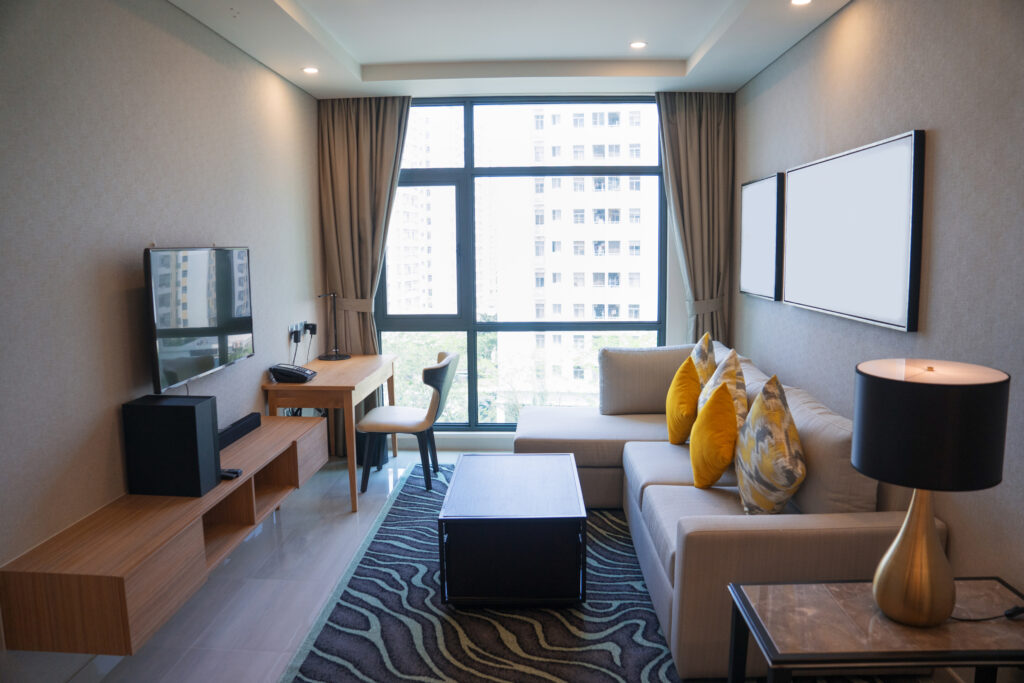
Consumer leasing is commonly used for household goods. Examples include:
- fridges and freezers
- washing machines and dryers
- lounges, beds and other furniture
- televisions and soundbars
- laptops, tablets and computers
- other household appliances and technology.
Moneysmart uses laptops, televisions and fridges as its examples of goods commonly supplied through a consumer lease.
You can browse furniture, home appliances including fridges and washing machines, TVs and sound, and computers and tablets, all supplied under regulated consumer leases.
How much does a consumer lease cost?
The regular payment is only one part of the cost. Before entering a consumer lease, look at:
- the amount of each payment
- how often you pay
- the length of the lease
- the total amount payable over the full term
- any fees and charges, such as a delivery fee
- any other costs disclosed in the agreement.
A small weekly or fortnightly payment can look manageable on its own but add up to much more over a long lease term. Moneysmart warns that you could end up paying more than double what it would cost to buy the item outright in a store, and recommends comparing the total cost of renting with the cost of buying.
The important question is not only:
“Can I manage $X per fortnight?”
It is also:
“How much will I pay in total, and what do I get under the agreement?”
Cost caps under Australian law
Australian consumer credit law caps the total cost of a regulated consumer lease. The cap is worked out from the base price of the goods and the length of the lease, plus any permitted fees such as reasonable delivery costs.
The calculation depends on your specific agreement, so ask your provider to show you the total amount payable and how it compares with the base price of the goods. Your lease agreement must state both figures.
Before signing
Ask for a copy of your consumer lease agreement and check the total amount payable. Moneysmart also provides a free rent vs buy calculator that compares the total cost of leasing an item against buying it outright.
At Lightning Rentals, the total amount payable and the lease term are set out in your agreement before you sign, and our team can walk you through them.
Compare the total, not the fortnight
Compare the total amount payable, not the fortnightly payment. Your lease agreement must show the total you will pay and the base price of the goods.
What is the 10% protected earnings rule?
Australian consumer lease law limits how much of your income can go towards consumer lease payments.
Under the rule, your consumer lease payments must be no more than 10% of your after-tax income over each payment period. Moneysmart puts it as no more than a $10 repayment for every $100 you earn.
The limit applies to all of your consumer leases together, not just the new one. If you already have a lease, its payments count towards the 10%.
The protected earnings rule is designed to reduce the risk that lease payments leave you without enough income for essentials. ASIC has identified compliance with the protected earnings amount as a key issue for the consumer lease industry.
How is a consumer lease application assessed?
Applying does not mean a consumer lease will be approved.
For regulated consumer leases, the provider must assess whether the lease is suitable for you. This usually means looking at your:
- requirements and objectives
- income
- regular expenses
- existing financial commitments
- other consumer leases
- overall financial situation.
The provider may need to verify your financial information, for example by reviewing bank statements. ASIC has named suitability assessments, disclosure and protected earnings as areas that consumer lease providers must get right.
The purpose of asking for financial information is not to judge whether you want the product. It is to check that the lease meets the legal requirements and that the payments fit within your budget.
At Lightning Rentals, we are a licensed credit provider and we assess every application responsibly. An application is only approved where the lease is suitable. You can start an application online or call our team on 0438 270 915.
How to apply with Lightning Rentals
What you need to apply, how your application is assessed and what happens after approval.
Ready to apply?
Lightning Rentals is a licensed credit provider. Every application is assessed responsibly.
Apply NowCan Centrelink recipients get a consumer lease?
Receiving a Centrelink payment does not, by itself, decide whether you can enter a consumer lease.
Eligibility and payment method are separate issues. A provider still has to assess your application under the same rules that apply to anyone else, including the protected earnings limit.
Centrepay is changing
There is an important change affecting Centrepay, the free bill-paying service run by Services Australia.
Services Australia has removed Household Goods Lease and Rental as a Centrepay service reason. Existing deductions in this category can continue only until 1 November 2026. New deductions cannot be started, and existing ones cannot be increased.
This does not mean consumer leasing is ending. It means Centrepay will no longer be available as a way to pay for household goods leases after the transition period. If your lease continues past that date, you will need another payment method.
Centrepay ending is not your lease ending
Centrepay ending for household goods leases does not mean your consumer lease is ending. Your lease continues. Only the way you pay changes.
Paying your lease through Centrepay?
Find out what happens on 1 November 2026, what it means for your agreement, and how to switch to PayTo.
How are consumer lease payments made?
Payment methods depend on the provider. Consumer leases involve scheduled payments over the term of the agreement, usually weekly or fortnightly.
It helps to separate two things:
- the consumer lease — the agreement itself
- the payment method — how each scheduled payment is made.
Changing your payment method does not cancel or change the underlying lease. If you stop a direct debit or a PayTo agreement, the payments under your lease are still due.
Lightning Rentals offers PayTo, direct debit through Ezidebit, and other arrangements depending on your agreement. Centrepay deductions for household goods leases end on 1 November 2026, and we are moving customers to PayTo ahead of that date. For details on each option and how to change your payment method, see our Payment Information page.
Payment options at Lightning Rentals
PayTo, direct debit and how to change your payment method.
How PayTo works
Authorising, managing and cancelling a PayTo agreement through your online banking.
Do I own the goods at the end of a consumer lease?
No, not automatically.
This is one of the most important things to understand about consumer leasing.
The National Credit Code defines a consumer lease as a contract for the hire of goods where the consumer does not have a right or obligation to purchase them. Moneysmart says the same thing in plain terms: when the lease ends, you do not own the item.
What happens next depends on your agreement. Moneysmart explains that you can generally return the item in working order, or, if the provider offers it, make an offer to purchase the item or nominate someone else to receive it. The provider tells you how much more you would need to pay to keep it.
Always check your specific agreement and your end-of-lease statement.
Consumer lease ≠ automatic ownership
Reaching the last scheduled payment does not make the goods yours. Check your agreement and end-of-lease statement for the options that apply.
What happens at the end of a consumer lease?
End-of-lease statements, returning the goods, purchase offers and what to check before your lease finishes.
Is a consumer lease the same as rent-to-own?
No. These terms should not be used interchangeably.
With a consumer lease, there is no contractual right or obligation to purchase the goods.
A rent-to-buy arrangement is different. Moneysmart explains that with rent to buy, you rent an item for a period, then pay an agreed amount at the end to buy it. You do not own the item until you have made all the payments, but the contract itself provides for ownership.
This distinction matters because wording such as “rent-to-own” can create the impression that making every scheduled rental payment automatically results in ownership. That is not how a consumer lease works.
If you are offered an agreement described as rent to buy, Moneysmart recommends reading the terms and checking that you will own the item at the end, and how much you will have to pay to buy it.
Consumer lease vs buying outright
Neither option should be judged only by the size of the first payment.
Consumer lease vs buying outright: key differences
| Consumer lease | Buy outright | |
|---|---|---|
|
Large purchase price upfront |
Generally no |
Yes |
|
Regular payments |
Yes |
No, if paid in full |
|
Use goods immediately |
Generally yes, once the agreement and delivery are complete |
Yes |
|
Own goods immediately |
No |
Yes |
|
Automatically own at end |
No |
Already owned |
|
Total cost |
Check the total amount payable |
Purchase price plus any delivery costs |
|
Ongoing contract |
Yes, for the length of the lease |
No |
Buying outright will often cost less in total if you have the funds available. According to Moneysmart, you could end up paying more than double the store price through a consumer lease, and recommends comparing the total cost of leasing with buying.
The decision may also depend on whether you have the money available to buy the item you need now.
Consumer lease vs BNPL vs NILS
These are different arrangements and should not be treated as interchangeable.
How the options compare
| Consumer lease | Buying outright | BNPL | NILS | |
|---|---|---|---|---|
|
Main structure |
Rent goods |
Purchase goods |
Purchase using instalments |
No-interest loan for eligible purposes |
|
Ownership |
Not automatic |
You own the goods |
You own the goods |
You own the goods |
|
Regular payments |
Yes |
Not if paid in full |
Yes |
Yes |
|
Total cost |
Compare total lease payments and fees |
Purchase price |
Check fees and terms |
No interest, eligibility applies |
|
Assessment |
Consumer lease requirements apply |
None for a cash purchase |
BNPL rules and processes apply |
Eligibility and affordability assessment |
|
Availability |
Provider and application dependent |
Funds required |
Provider and application dependent |
Eligibility requirements apply |
Moneysmart lists No Interest Loans, Centrelink advance payments, lay-by and savings as cheaper ways to get an essential item, and notes that No Interest Loans can help people on a lower income buy essential household goods such as a fridge or computer.
The right option depends on your eligibility, circumstances, how urgently you need the item, and the total cost of each option.
What rights do I have under a consumer lease?
Australian consumer lease customers are protected under two sets of law: consumer credit legislation, and the Australian Consumer Law.
Under consumer credit law, regulated consumer leases come with protections relating to:
- disclosure of costs and terms
- a suitability assessment before the lease is offered
- a cap on the total cost of the lease
- the 10% protected earnings limit
- the right to ask for financial hardship assistance
- access to dispute resolution.
ASIC has named the protected earnings amount, the cost cap, suitability assessments, disclosure and hardship requests as the key obligations it checks consumer lease providers against.
Separately, the ACCC confirms that most Australian Consumer Law consumer guarantees apply when you hire or lease a product.
What happens if my leased product breaks?
Leasing a product does not remove the consumer guarantees that apply under Australian Consumer Law.
According to the ACCC, most consumer guarantees apply to products that are hired or leased. Leased goods can therefore be covered by guarantees such as acceptable quality, depending on the circumstances.
What happens next depends on:
- the nature of the fault
- the product
- how and when the problem occurred
- which consumer guarantee applies
- your lease agreement
- any manufacturer’s warranty.
A manufacturer’s warranty is extra to your statutory rights. It does not replace them. Moneysmart also points out that insurance or extended warranties offered with a leased item are optional, and the item may already be covered under Australian Consumer Law.
If a leased product develops a fault, contact the lease provider and explain the problem. Do not simply stop paying. Take photos of the fault, keep a record of when it started, and follow the provider’s instructions for repair or replacement.
Repairs and warranties at Lightning Rentals
What to do if your leased product develops a fault, and how repairs and warranty claims are handled.
What happens if I miss a consumer lease payment?
Missing a scheduled payment does not mean every customer faces the same consequence. The outcome depends on your agreement, your circumstances and the consumer credit rules that apply.
In general, a missed or failed payment can:
- leave an outstanding amount on your account
- attract a dishonour or missed payment fee if your agreement allows one
- place your agreement in arrears if it is not fixed.
Moneysmart notes that a dishonour fee can be charged if the provider cannot process a payment, for example when there is not enough money in your account. Any such fee must be listed in your lease agreement.
If you know you are going to have trouble making a payment, contact the lease provider before the payment date. This matters most where the difficulty is not temporary and you may need financial hardship assistance.
At Lightning Rentals, if a scheduled payment fails, we notify you by SMS with the steps to fix it. Contact our team as soon as you can so the payment can be sorted before it becomes a missed payment. Any fee that applies is set out in your consumer lease agreement.
What if I am experiencing financial hardship?
If you are struggling to make your consumer lease payments, contact the provider and explain your circumstances. Do this as early as you can.
Under Australian consumer credit law, consumer lease customers have the right to apply for a hardship variation. Moneysmart confirms this right and recommends contacting the lease provider to make your repayments more manageable.
The National Debt Helpline gives the same advice: work out what you can realistically afford, then contact the lease provider as soon as you are in difficulty.
Free and confidential financial counselling is available through the National Debt Helpline on 1800 007 007, Monday to Friday.
Do not stop communicating with the provider, and do not cancel your payment method and assume the lease has ended. Early contact gives you the best chance of an arrangement that works.
At Lightning Rentals, you can ask for hardship assistance by calling 0438 270 915 or through our contact page. Tell us what has changed and what you can currently afford. Every hardship request is considered on your circumstances.
You can find more information on Lightning Rentals hardship request and complaints resolution process at Lightning Rentals Complaints Resolution.
Struggling with payments?
How hardship assistance works, what to ask for, and where to get free financial counselling.
Can I end a consumer lease early?
A consumer lease can usually be ended before its scheduled end date, but you should understand the cost first.
Before deciding, check:
- your agreement
- any early termination amount or charges
- what happens to the leased goods
- when they must be returned
- whether any other amount remains payable.
Moneysmart warns that if you end a lease early, you may have to pay an amount equal to all the rental payments for the rest of the lease, and recommends checking termination fees before you sign. Under Australian consumer credit law, your lease agreement must contain enough information for you to work out what you would need to pay to end it early.
Ask the provider for a written statement of the amount and the steps that apply to your agreement before you act.
At Lightning Rentals, contact our team if you are considering ending your lease early. We will explain the early termination amount for your agreement in writing and what happens to the goods. If the reason is financial difficulty, ask about hardship assistance first.
What happens at the end of a consumer lease?
Your provider must give you information before the lease ends.
Moneysmart states that 90 days before the end of the lease, the provider must give you an end-of-lease statement showing:
- the date the lease is due to end
- when, where and how the leased item should be returned
- any fees or penalties for failing to return it by the required date
- whether you are able to buy the item and, if so, the cost.
Remember: reaching the final scheduled rental payment does not automatically transfer ownership. Once the lease ends and you have returned the goods, no further rental payments should be taken from your account.
At Lightning Rentals, we send your end-of-lease statement by email ahead of the 90-day requirement, and a reminder when two payments remain. There are two outcomes at the end of a Lightning Rentals lease: return the goods, or accept an end-of-lease purchase offer if one is made for your product. The purchase offer is separate from your rental payments and is not automatic. To discuss your end-of-lease options, call Lucy on 0484 348 646.
What if I have a complaint about a consumer lease?
Start by contacting the lease provider and using its internal dispute resolution (IDR) process. Every licensed credit provider must have one.
Explain:
- what happened
- what outcome you are seeking
- relevant agreement details
- any supporting documents.
If the complaint cannot be resolved through the provider’s internal process, eligible complaints about financial firms can be taken to the Australian Financial Complaints Authority (AFCA). AFCA is a free and independent service. You can lodge a complaint online at afca.org.au or call 1800 931 678.
Keep copies of all correspondence and relevant documents.
Lightning Rentals customers can read our complaints process, including how to lodge a complaint and how long we take to respond, on our complaints resolution page.
Consumer lease terminology
| Term | Plain-English meaning |
|---|---|
|
Consumer lease |
An agreement to hire goods without a contractual right or obligation to purchase them |
|
Lessor |
The provider that owns and leases the goods |
|
Lessee |
The person leasing and using the goods |
|
Lease term |
How long the lease runs |
|
Rental payment |
The regular amount payable under the lease |
|
Total amount payable |
The total scheduled amount payable under the agreement |
|
Base price |
The price of the goods used to work out the lease cost cap, usually the recommended retail price |
|
Protected earnings amount |
The rule limiting consumer lease payments to 10% of after-tax income |
|
Hardship |
Financial circumstances that make it difficult to meet payment obligations |
|
End-of-lease statement |
Information the provider must give 90 days before the lease ends, covering the end date and return or purchase arrangements |
|
PayTo |
A bank account payment method where you approve a payment agreement through your online banking |
|
Centrepay |
A Services Australia bill-paying service for eligible expenses. Household goods lease and rental deductions end on 1 November 2026 |
Consumer lease checklist
Before signing a consumer lease, check:
- What exactly am I leasing?
- How long does the agreement run?
- How much is each payment?
- How often will I pay?
- What is the total amount payable?
- Are there additional fees or charges?
- How will payments be made?
- What happens if the product develops a fault?
- What happens if I experience financial hardship?
- What would happen if I ended the lease early?
- What happens to the goods when the lease ends?
- Have I compared the total cost with buying outright and any alternatives available to me?
Frequently asked questions
Is a consumer lease a loan?
Not generally. A consumer lease is an agreement to hire goods, not a loan used to buy them. The National Credit Code contains specific provisions that regulate consumer leases.
Do I own the product after making every lease payment?
No, not automatically. A regulated consumer lease does not give you a contractual right or obligation to purchase the goods. Check your agreement and end-of-lease statement for the options that apply.
Is consumer leasing the same as rent-to-own?
No. A rent-to-buy arrangement includes a way to purchase the item at the end. A consumer lease does not automatically provide ownership.
Are consumer leases regulated in Australia?
Yes. Regulated consumer leases are covered by Australia’s consumer credit laws, including the National Credit Code. Providers must hold an Australian credit licence.
Are leased goods covered by Australian Consumer Law?
Yes, mostly. The ACCC confirms that most consumer guarantees apply to hired or leased goods. The guarantees related to ownership do not apply.
Can I lease a fridge or washing machine?
Yes. Household appliances such as fridges and washing machines are common examples of goods supplied through a consumer lease.
Can I have more than one consumer lease?
Possibly, but every lease you hold counts towards the 10% protected earnings limit, including leases with other providers. A new lease must still pass the provider’s suitability assessment.
Do consumer lease companies check bank statements?
Yes. ASIC requires consumer lease providers to obtain and review bank statements as part of the suitability assessment. The exact documents requested depend on the provider’s process.
Does applying guarantee approval?
No. Every application must be assessed. A provider should never suggest that approval is guaranteed.
What does the 10% protected earnings rule mean?
Your combined consumer lease payments cannot be more than 10% of your after-tax income in each payment period. The exact calculation depends on your income cycle and existing leases.
Can I use a consumer lease if I receive Centrelink?
Receiving Centrelink does not decide eligibility on its own. The proposed lease still has to meet the assessment and protected earnings requirements.
Is Centrepay ending?
Centrepay itself is not ending. Household Goods Lease and Rental is being removed as a Centrepay service reason. Existing deductions can continue only until 1 November 2026.
Do not wait for Lightning Rentals to contact you. Call Lucy on 0484 348 646 to set up PayTo before the cut-off.
What happens if my leased product stops working?
Contact your provider. Most Australian Consumer Law consumer guarantees apply to leased goods, and the right remedy depends on the fault and the circumstances.
Can I stop payments if the product breaks?
Do not assume a fault cancels your payment obligations. Report the problem to the provider so your rights and the appropriate remedy can be sorted out.
Can I get help if I can't afford my payments?
Yes. Consumer lease customers can request hardship assistance from their provider. Free financial counselling is also available through the National Debt Helpline on 1800 007 007.
Can I return the goods before the lease ends?
Early termination may be possible, but the cost and return arrangements depend on your agreement. Ask your provider for the amount and process in writing.
What should I compare before choosing a consumer lease?
Compare the total amount payable, the lease term, payment frequency, fees, what happens at the end, and the cost of alternatives. Not just the regular payment.
Are No Interest Loans an alternative?
For eligible people, yes. Moneysmart recommends considering No Interest Loans and other options before committing to a consumer lease.
When will I know what happens at the end of my lease?
Your provider must give you an end-of-lease statement 90 days before the lease ends. It sets out the end date, return arrangements and any option to buy.
About Lightning Rentals
Lightning Rentals is an Australian consumer lease provider supplying household furniture, appliances, TVs and technology to customers across Australia. Lightning Rentals is a trading name of Venture Rentals Pty Ltd, which holds Australian Credit Licence 434036 and is regulated by ASIC.
Customers can browse household products, apply online, and if approved, enter a regulated consumer lease that sets out the fixed term, the regular payments, the total amount payable and what happens at the end. Every application is assessed responsibly under Australian consumer credit law. We offer flexible payment options, and a lease is only offered where it is suitable for the customer.
Before applying, we encourage every customer to understand the cost and obligations of a consumer lease and to consider the alternatives available to them.
Explore: About Lightning Rentals | Rental Help & Guides | Furniture | Home Appliances | Apply Now
Ready to apply?
Lightning Rentals is a licensed credit provider. Every application is assessed responsibly.
Apply NowREVIEWED BY
Consumer Leasing Specialist · LinkedIn
Dean Hawes has more than nine years’ experience in Australia’s consumer leasing industry and reviews our content to help ensure it is accurate, practical and up to date. Drawing on his expertise in consumer leasing, affordability assessments, and household appliance and furniture rental, he helps Australians make informed leasing decisions.
Last reviewed: September 2026
Explore Rental Help & Guides
Understanding consumer leasing
- Consumer Leasing in Australia: Complete Guide (this page)
- Lightning Rentals Application Process (coming soon)
- Repairs and Warranties (coming soon)
Payments and Centrepay changes
- Centrepay Household Goods Changes: What Happens on 1 November 2026?
- PayTo Explained (coming soon)
During and after your lease
- Consumer Lease Hardship Guide (coming soon)
- What Happens at the End of a Consumer Lease? (coming soon)
Browse the Rental Help and Guides centre for all guides.
Sources
This guide draws on the following official sources. All links checked 4 September 2026.
Government and regulator sources
- Moneysmart (ASIC) – Consumer leases. Last updated 14 July 2026.
- Moneysmart (ASIC) – Rent vs buy calculator
- Moneysmart (ASIC) – No Interest Loans
- ASIC – Consumer lease industry on notice for potential compliance failures following reforms (May 2025)
- ACCC – Consumer rights and guarantees
- Services Australia – Centrepay is changing
- Federal Register of Legislation – National Consumer Credit Protection Act 2009, including the National Credit Code