
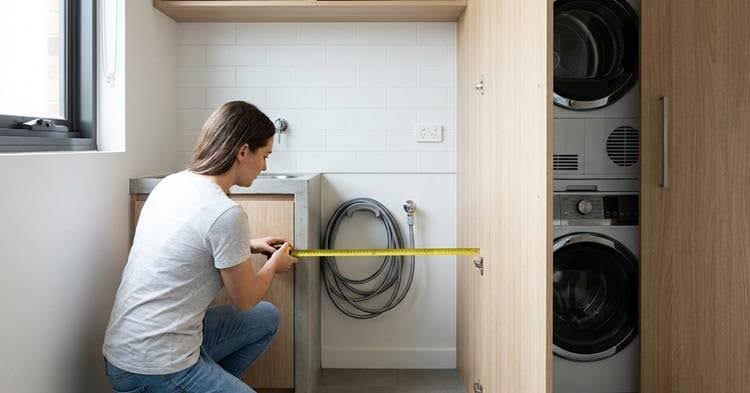
Most laundry room headaches stem from poor planning rather than the appliance itself. Getting a new washer or dryer delivered is exciting, but that excitement fades quickly if the unit cannot fit through the front door or sit properly in its designated alcove.
This washing machine size guide helps renters bypass expensive and frustrating errors related to door clearances, water hoses, proper ventilation, delivery access, and matching the machine to actual household needs. Taking a few minutes to measure your space properly saves you from the hassle of returning an appliance that simply does not fit.
Getting Your Laundry Space Ready
A laundry appliance must fit the physical room, navigate the delivery path safely, and handle your household’s daily washing routine. Poor planning often leads to delayed deliveries, unexpected installation hurdles, scratched walls, and a frustrating user experience. Small laundries in apartments or older regional homes require significantly more preparation than many people realise.
Spending a few extra minutes measuring your space can prevent costly mistakes later. From delivery access to ventilation and door clearance, every detail plays a role in creating a functional laundry.
Mistake 1: Choosing Based Only on Width
Many people measure only the visible gap between the wall and the sink cabinet, assuming that is the only dimension that matters. They often overlook the appliance’s depth, the space needed for hoses at the back, and the clearance required for the door or lid to open fully.
Front loader dimensions specifically impact the required depth because the door swings outward, requiring ample front clearance so you can comfortably load and unload your clothes. Delivery path risks present another major hurdle. You have to consider narrow hallways, tight doorways, sharp corners, and awkward staircases. If the machine cannot make it from the delivery truck to the laundry room, the perfect width measurement no longer matters.
Mistake 2: Choosing Capacity Without Thinking About Your Household
Selecting the wrong capacity can be just as inconvenient as choosing the wrong dimensions. A machine that’s too small may struggle to keep up with frequent loads, while one that’s much larger than necessary can consume more water and electricity than your household requires.
When considering the right washing machine capacity for family needs, think about how many people live in your home, how often you wash bulky items such as towels and bedding, and whether you regularly do multiple loads each week. Singles, couples, share houses, and larger families all have different laundry requirements.
If you’re unsure where to start, browse our full range of washing machines for rent to compare capacities and find a model that suits both your household and available space.
Mistake 3: Ignoring Dryer Placement Requirements
Many apartment size dryer problems originate from inadequate airflow and ignoring heat clearance rules. The physical space around the dryer, the clearance from the back wall, and whether the unit can sit safely in a compact laundry closet all matter immensely. Proper ventilation dictates how well the machine performs, how effectively it dissipates heat, and how safely it operates in your home.
If external venting isn’t practical, a heat pump dryer is worth considering. Heat pump models don’t require an external exhaust, making them well suited to apartments, laundries, and other enclosed spaces. They also minimise excess heat and help reduce condensation, making them a popular choice for homes where moisture build-up is a concern.
Wall-mounted options exist to save floor space, but their placement still requires careful planning to avoid blocking exhaust vents or creating a fire hazard. Check our rental dryers built for smaller spaces to find suitable options that match your specific ventilation setup.
Mistake 4: Not Planning for a Stacked Laundry Setup
Stacking a washer and dryer is an excellent way to maximise floor space, but only if the appliances and room are designed for it. Manufacturer compatibility, weight distribution, accessibility, and overall stability should all be considered before deciding on a vertical configuration.
Most stacked installations require a dryer stacking kit for safe installation. Before setting up your appliances, make sure you have a laundry stacking kit that’s compatible with your washer and dryer to keep the setup secure and stable.
Mistake 5: Renting Two Separate Appliances When One Combo Could Work Better
In studios, granny flats, and very compact apartments, fitting both a washing machine and dryer into the available space isn’t always practical. In these situations, a combo appliance can provide a convenient alternative.
Although washer-dryer combos generally take longer to complete a full wash-and-dry cycle than separate appliances, they can free up valuable floor space while still meeting the needs of smaller households. If space is your biggest limitation, consider a front-load and dryer combo unit as an efficient all-in-one solution.
Measure First: Your Washing Machine Size Guide Checklist
Before renting a new washer or dryer, take a few minutes to confirm that both the appliance and your home are ready for installation.
- Measure the width, depth, and height of your laundry space, including skirting boards and cabinetry.
- Check there is enough room for the washer door or lid to open fully.
- Measure all delivery access points, including hallways, doorways, lifts, and staircases.
- Confirm the locations of plumbing connections, drainage points, and power outlets.
- Allow adequate ventilation space around the appliance according to the manufacturer’s recommendations.
- Choose a capacity that matches your household’s weekly laundry volume.
- Decide whether a stacked setup or combo unit is the better use of your available space.
- Compare your measurements against the appliance specifications before placing your order.
Once you’ve confirmed everything fits, browse our full laundry appliance range to find a solution that suits both your home and your lifestyle.
If you’re still deciding between washer styles, our guide to front-load vs top-load washing machines explains the differences in space requirements, installation considerations, and everyday use in more detail.
Final Thoughts
Choosing the right laundry appliance isn’t just about finding a model that fits your budget but about making sure it fits your home and your household’s needs. By measuring carefully, planning your layout, and selecting the right capacity and configuration, you can avoid common installation issues and enjoy a smoother rental experience from day one.
FAQs

Reviewed by
Dean Hawes has more than nine years’ experience in Australia’s consumer leasing industry and reviews our content to help ensure it is accurate, practical and up to date. Drawing on his expertise in consumer leasing, affordability assessments, and household appliance and furniture rental, he helps Australians make informed leasing decisions.