
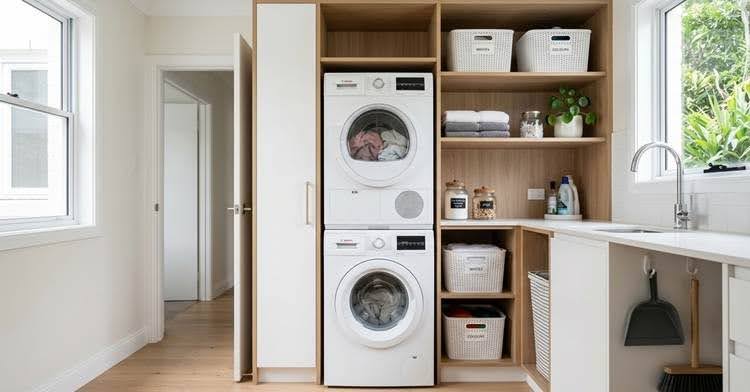
Living in an apartment, granny flat, or home with a combined bathroom and laundry often means making every square metre count. Choosing the right laundry appliances for small spaces isn’t simply about finding compact machines but also involves planning around your available floor space, plumbing, ventilation, and everyday laundry routine.
A little preparation before renting can save you from installation issues, awkward layouts, and appliances that don’t suit your household. This guide walks you through the key steps to help you choose a practical laundry setup that fits your home and the way you live.
What You’ll Need
Before comparing appliances, have the following ready:
- A tape measure.
- A notebook or your phone to record measurements.
- Photos of your laundry or bathroom.
- Details of your plumbing, power points, and ventilation.
- An estimate of your household’s weekly washing needs.
Having this information on hand makes it much easier to compare different appliance configurations and choose the one that best suits your available space.
Step 1: Measure Your Available Laundry Space
The first step is measuring the space where your appliances will be installed. Even the most compact washing machine or dryer needs enough room to operate safely and efficiently.
Measure:
- The width of the available cavity.
- The height from the floor to any overhead cupboards or shelving.
- The depth from the wall to the front edge of the space.
- Door clearance when appliance doors are fully open.
- Space behind the appliance for hoses and power connections.
It’s also worth checking your delivery path before arranging installation. Narrow hallways, staircases, lifts, or tight corners can make moving appliances into smaller homes more challenging.
As a general guide, leave at least 50 mm of clearance around your appliances to allow airflow, accommodate hoses, and simplify future maintenance.
Step 2: Choose the Right Laundry Configuration
Once you’ve measured your space, decide which appliance layout best suits both your home and your household.
Your three main options are:
| Appliance Type | Best For | Advantages | Considerations |
| Stacked washer dryer | Narrow spaces with vertical clearance | Saves floor space, allows washing and drying at the same time | Requires secure stacking |
| Washer dryer combo unit | Apartments and combined laundries | Single footprint, flexible installation | Longer combined wash and dry cycles |
| Separate washer and dryer | Larger laundry areas | Greater flexibility and independent appliances | Requires more floor space |
The best option depends on the available room, your washing habits, and how frequently you use both appliances.
Stacked Washer Dryer
A stacked washer dryer is one of the most effective ways to maximise space in apartments and compact homes. Rather than placing appliances side by side, the dryer sits securely above the washing machine, leaving more floor space available.
This arrangement also allows you to wash one load while another dries, making it a practical solution for busy households.
For a safe installation, you’ll need a laundry stacking kit to securely connect the two appliances and minimise movement during spin cycles.
Washer Dryer Combo Unit
A washer dryer combo unit combines washing and drying into a single appliance, making it ideal for homes where space is extremely limited.
Because it occupies the footprint of a single washing machine, it’s particularly well suited to apartments, studios, and combined bathroom-laundry layouts.
Although wash-and-dry programmes generally take longer than using separate appliances, many appreciate the convenience of loading their washing before work and returning to clean, dry clothes.
If this option suits your household, consider a front-load washer and dryer combo for an all-in-one space-saving solution.
Separate Washer and Dryer
If your laundry has enough width, separate appliances continue to offer the greatest flexibility.
Replacing one appliance is easier if it reaches the end of its lifespan, and placing them side by side creates a useful work surface for folding clothes or organising laundry baskets.
If you’re considering this setup, browse options to rent a washing machine before choosing a matching dryer.
Step 3: Check Ventilation, Plumbing, and Power
Before selecting your appliances, confirm that your home can support their installation requirements.
Start by checking your plumbing connections. Ensure your washing machine hoses can comfortably reach both the water supply and drainage point without excessive stretching or bending.
Next, inspect your electrical outlets. Washing machines and dryers should be connected according to the manufacturer’s recommendations, with sufficient power available for both appliances if they’ll be operating together.
Ventilation is equally important, particularly when selecting a dryer. Some dryers require external venting, while others recycle moisture internally, making them more suitable for apartments and homes where external ventilation isn’t practical.
Finally, if you live in an apartment building or rental complex, check whether there are any delivery restrictions or installation requirements before arranging your appliance delivery.
Step 4: Choose the Right Dryer for Your Space
Selecting the right dryer is just as important as choosing the right washing machine. In smaller homes, the dryer’s footprint, ventilation requirements, and placement can significantly affect how functional your laundry area is.
If you’re working with limited space, consider the following options:
- Wall-mounted dryers, which free up valuable floor space.
- Apartment size dryer models designed for compact laundries.
- Condenser dryers, which collect moisture in a removable water tank instead of venting it outside.
- Heat pump dryers, which also collect moisture internally while operating at lower temperatures for greater energy efficiency.
If your apartment or granny flat doesn’t allow external venting, a condenser or heat pump dryer is often the better choice. Unlike traditional vented dryers, these models don’t release warm, moist air into the room, helping reduce condensation in smaller or enclosed laundry areas.
Browse our range of dryers built for smaller spaces to compare compact models suitable for apartments, combined laundries, and other space-conscious homes.
Step 5: Match Appliance Capacity to Your Household
Choosing appliances with the right capacity helps you balance available space with your weekly laundry needs.
A single person or couple may only need a smaller washing machine, while larger households usually benefit from higher-capacity appliances that reduce the number of loads each week.
Think about:
- How many loads you typically wash each week.
- Whether you regularly wash doonas or bulky bedding.
- The number of towels your household uses.
- Children’s uniforms and sports clothing.
- Whether you prefer washing smaller loads more frequently.
Avoid renting appliances that are much larger than your household requires. While higher-capacity machines can wash more clothing in one cycle, they also occupy more space that could be better used elsewhere in a compact home.
Common Mistakes to Avoid
Even with careful planning, it’s easy to overlook details that affect both installation and everyday use.
Some of the most common mistakes include:
- Measuring only the floor space without checking door clearance.
- Forgetting to allow room for hoses and electrical connections.
- Choosing appliances that are larger than your household needs.
- Ignoring ventilation requirements for dryers.
- Overlooking narrow hallways, staircases, or lifts during delivery.
- Selecting appliances without checking available power outlets.
Taking a little extra time to plan your layout before renting can help you avoid unnecessary installation issues later.
Space-Saving Tips
A well-planned laundry doesn’t always require more room. Sometimes it simply requires smarter use of the available space.
Some practical ways to maximise smaller laundries include:
- Installing shelves above your appliances for detergents and cleaning supplies.
- Using wall-mounted drying racks when floor space is limited.
- Choosing multifunction appliances where practical.
- Keeping plumbing connections easily accessible for maintenance.
- Leaving enough clearance around appliances for airflow.
- Using baskets or storage containers that slide neatly beneath benches or shelves.
Small adjustments like these can make everyday laundry tasks much easier without requiring major renovations.
Making the Most of a Small Laundry
Planning your laundry before renting helps you make better use of every available centimetre. Measuring carefully, choosing the right appliance configuration, and considering ventilation and capacity will help you create a laundry that works efficiently without overwhelming your available space.
Whether you’re furnishing an apartment, a granny flat, or another compact home, choosing appliances that suit your layout makes day-to-day laundry much more convenient.
Browse our full laundry appliance range to compare washing machines, dryers, and space-saving laundry solutions. If you’re still deciding between washing machine styles, read our guide to front-load vs top-load washing machines for more advice on choosing the best option for your available space.
FAQs

Reviewed by
Dean Hawes has more than nine years’ experience in Australia’s consumer leasing industry and reviews our content to help ensure it is accurate, practical and up to date. Drawing on his expertise in consumer leasing, affordability assessments, and household appliance and furniture rental, he helps Australians make informed leasing decisions.